Kennedy Landscaping installs composite and timber decking across South Lanarkshire as part of complete garden transformations. Where a deck earns its place within a wider design — a level entertaining area adjoining the house, or a terrace across a slope — it is built in alongside the paving, lawn and boundaries that make the whole garden work.
We do not undertake standalone decking-only projects. This is a deliberate position: our specialism is the complete garden, and decking performs best when designed as one element of it.
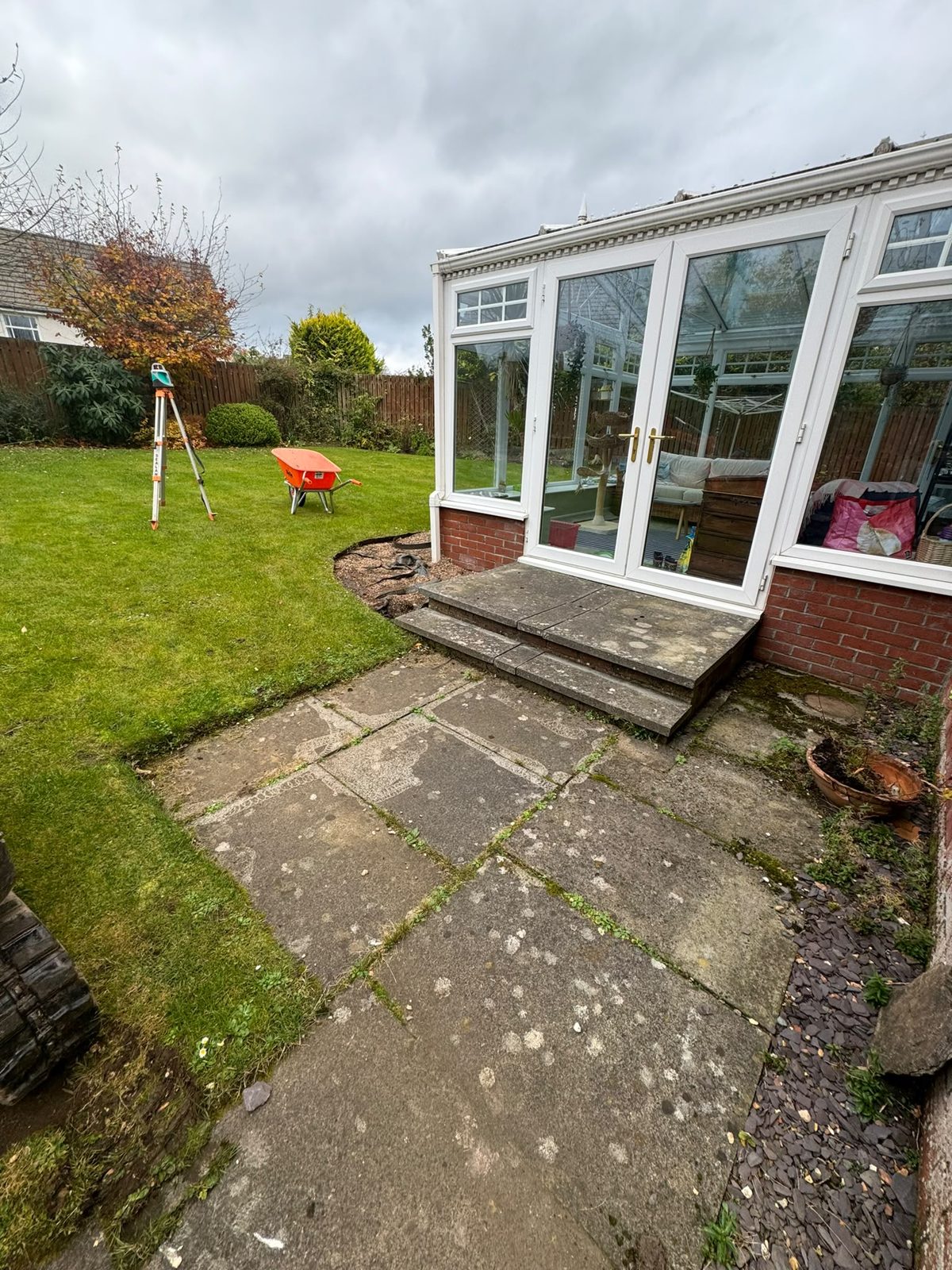
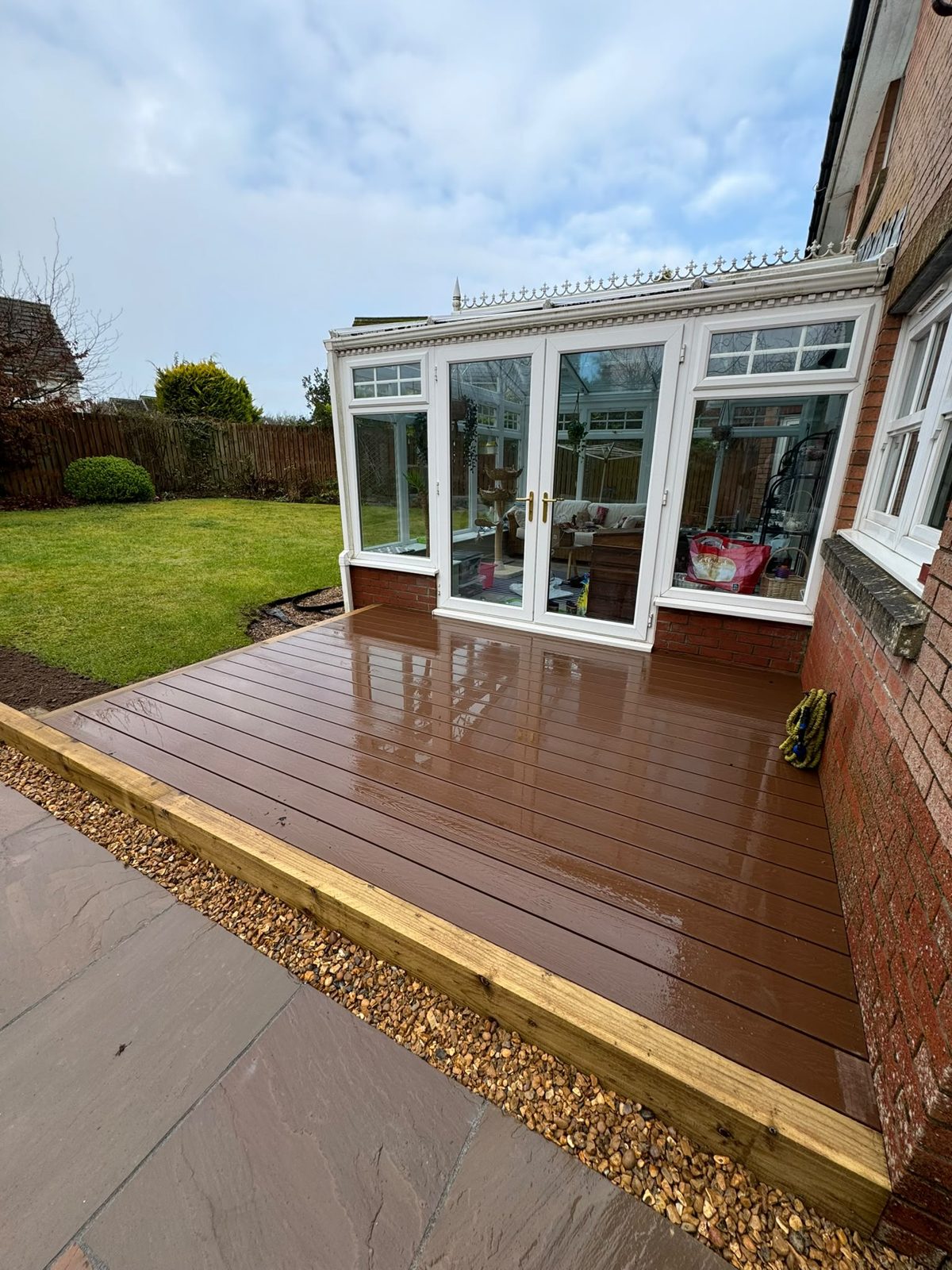
What a level deck does for a house that sat above its garden: the conservatory doors now open straight onto a dry, usable terrace.
The conservatory doors opened onto stained concrete slabs and a pair of crumbling steps. We built a level composite deck across the full width of the house, edged in treated timber with a gravel margin, so the doors now open straight onto a dry, slip-resistant terrace that needs no staining or maintenance.


Decking has a mixed reputation in Scotland, and most of it is earned by decks that were built on a poor frame, left to rot at the posts or laid in a spot that never dries out. Built properly, in the right place, a deck is one of the best ways to create a level, comfortable outdoor room on a garden that slopes or sits above the lawn.
We build decking as one element of a complete garden transformation, designed with the paving, lawn and boundaries so the levels, drainage and lighting all work together. Every project carries our written 5-year workmanship guarantee.
Our first recommendation for most gardens. Capped composite boards do not rot, warp, splinter or need staining, stay slip-resistant when wet, and come in woodgrain finishes that suit both traditional and contemporary houses. Hidden fixings give a clean, screw-free surface.
Hardwood and treated softwood still have a place where the client wants the look and feel of real timber. We build it on a properly treated and ventilated sub-frame and explain the maintenance it will need before you choose it.
Every deck stands or falls on its frame. Ours are built from treated joists on concrete pads or ground screws, correctly spaced for the board, with ventilation beneath and a weed membrane and gravel below. It is the part you never see and the part we are most careful about.
Glass balustrades keep the view open; timber or composite rails suit a more traditional garden. Integrated step and post lighting makes the deck usable on summer evenings and safer in winter.
For most gardens, yes. It does not rot, warp or need staining, and it stays slip-resistant when wet, which matters in our climate. The frame beneath still has to be built properly, which is where most decking problems start.
Where the ground slopes away from the house, where a level terrace is wanted above a lawn, or where an awkward corner needs to become a seating area. We will tell you honestly if paving would serve a spot better.
Not usually for a deck close to ground level in a domestic garden. Raised decks, or those near a boundary or in a conservation area, can need consent. We check this at the site visit.
Composite decking on a properly built frame will last 25 years or more with almost no maintenance. Timber lasts well if it is treated and looked after, but it needs that care.
We build decking as part of a wider garden project rather than as a standalone job, because a deck performs best when it is designed with the paving, lawn and boundaries around it.
Related: Garden transformations · Patios & paving · Fencing & walls · Decking in East Kilbride · Decking in Strathaven
Arrange a free site visit →If your garden calls for more than a single addition, that is precisely the work we are built for. Explore what a full transformation involves, walk through our completed gardens, and arrange a free site visit to discuss it.
Explore Garden Transformations